
Clothes Take Multiple Cycles to Dry
When bath towels or jeans remain damp after a full 60-minute cycle, trapped moisture cannot escape through the restricted exhaust duct, forcing the dryer to recirculate humid air.
About Drying Time Delays →Protect your home against dangerous dryer lint fires and cut extended drying cycles in half. Our Orland Park technicians use rotary brush duct scourers and high-velocity HEPA vacuum extraction systems to thoroughly clear residential dryer exhaust ducts from dryer to outdoor termination.
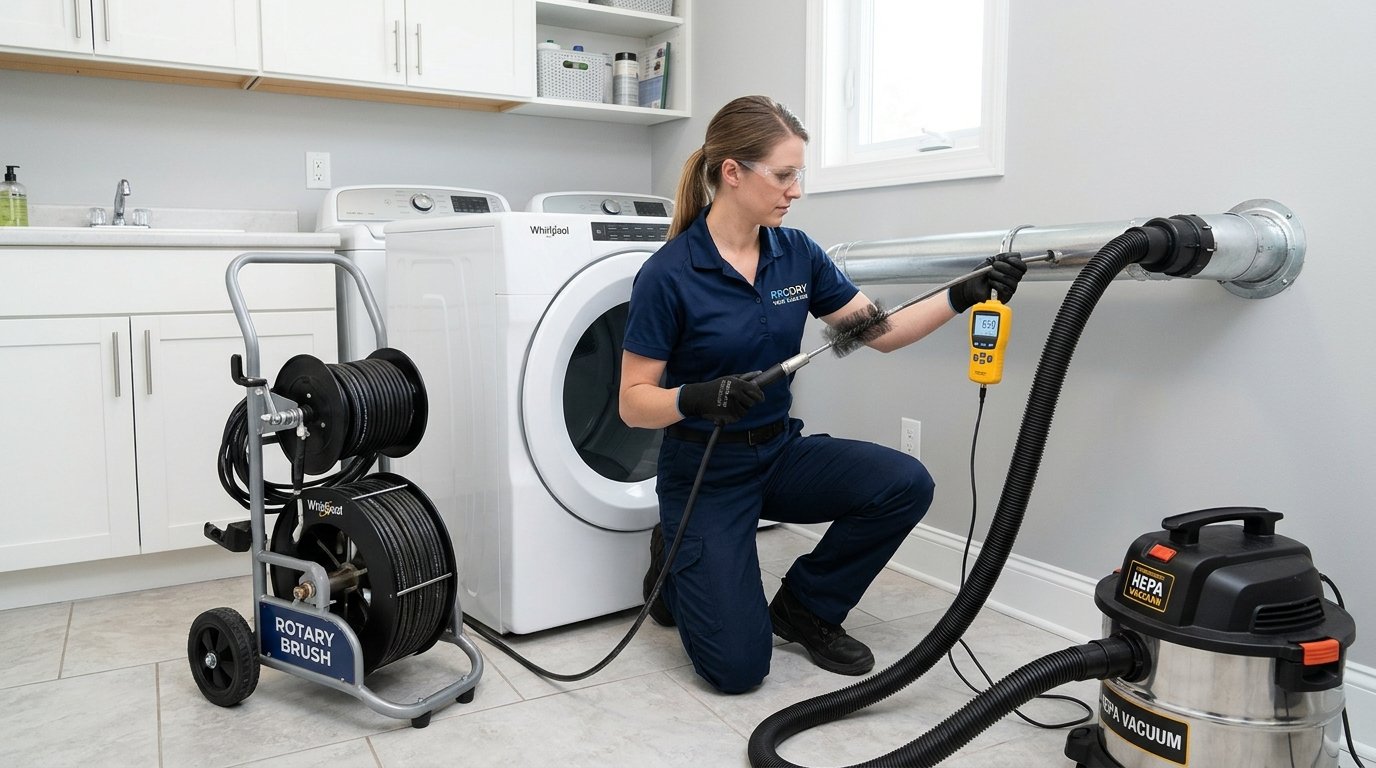
According to the National Fire Protection Association (NFPA), failure to clean dryer exhaust vents is the leading cause of home clothes dryer fires, responsible for thousands of residential fires and millions in property damage every year. As damp clothing tumbles, fine fabric fibers bypass the internal lint trap and settle along the interior walls of long duct runs.
Over time, this flammable lint buildup chokes exhaust airflow. Your dryer is forced to run significantly hotter, cycling non-resettable thermal safety fuses, overworking blower motors, and taking two to three cycles just to dry a standard load of towels. We provide professional dryer vent cleaning across Orland Park, using rotary brush rods and high-volume negative air vacuums to restore 100% full airflow.
A restricted dryer exhaust duct exhibits unmistakable symptoms before a thermal fuse blows or a fire hazard develops. Below are the common warnings Orland Park homeowners experience.
When bath towels or jeans remain damp after a full 60-minute cycle, trapped moisture cannot escape through the restricted exhaust duct, forcing the dryer to recirculate humid air.
About Drying Time Delays →Excessive thermal energy builds up inside the dryer drum and metal cabinet when choked exhaust backpressure prevents heat dissipation through the outdoor wall termination.
About Overheating Risks →A distinct burning smell indicates lint buildup has accumulated directly against the 5,000-watt electric heating element coils or gas burner flame cone, presenting an immediate fire hazard.
Address Burning Odors →Trapped moisture escaping through loose or punctured transition duct seams turns your laundry room into a humid sauna and causes condensation on nearby walls.
Check Humidity Causes →The outdoor louvers or damper flapper on your outside exterior wall or roofline should blow wide open during operation. If it barely budges, airflow is critically choked.
Check Exterior Flapper →Modern dryers feature internal cycling thermostats and safety high-limit fuses. When duct backpressure traps excessive heat, the safety switches trip to prevent an internal fire.
Diagnose Thermal Cutoff →Piles of loose fuzzy lint on the floor behind your dryer indicate the transition hose has cracked, slipped off the exhaust collar, or blown apart under pressure.
Check Transition Hose →Broken or missing outdoor pest screens allow birds, squirrels, or mice to pack exterior duct terminations with dry twigs, leaves, and straw, creating a total blockage.
Clear Exterior Nest →In vertical second-floor roof duct runs, warm moist exhaust air condenses against cold attic ductwork, creating pools of stagnant dirty water that leak through drywall.
Resolve Duct Condensation →See what Orland Park homeowners say about our thorough airflow testing, clean dust-free workmanship, and safety focus.
“Our dryer took almost three cycles to dry our towels. The tech used a spinning brush and industrial vacuum that pulled out an incredible amount of packed lint from our 25-foot duct run. The dryer now dries full loads in 35 minutes!”
“We have a second-floor laundry room with a vent going out through the roof. He cleaned the entire pipe, cleared the outdoor roof termination cap safely, and tested the airflow velocity before leaving. Very professional and polite.”
“Called because the laundry room was getting very hot and smelled like burnt lint. He removed dangerous plastic foil ducting behind the dryer and installed code-compliant rigid aluminum pipe. Fast service and honest pricing.”
Dryer exhaust configurations in Orland Park range from simple through-the-wall runs to complex vertical roof ducts and booster systems. We service all residential and multi-family vent layouts.
Ground-floor laundry rooms venting directly through exterior brick or siding with a 5 to 10-foot rigid pipe run.
Upper-floor laundry suites venting vertically through attic spaces and roof jacks, prone to severe moisture condensation.
Extended duct runs exceeding 35 equivalent feet that require specialized motorized booster fans to maintain exhaust velocity.
Multi-family residential utility corridors requiring careful rotary navigation through long fire-rated duct passages.
Lower-level laundry setups routing exhaust pipe through foundation sill plates and crawl spaces with multiple 90-degree elbows.
Laundromats, salons, and fitness centers operating high-capacity dryers requiring heavy-duty industrial lint scouring.
The material connecting your dryer to the wall exhaust port plays a massive role in fire safety and operational airflow.
Our technicians replace dangerous plastic or crushed foil hoses with safe, code-compliant semi-rigid or rigid aluminum pipe.
A comprehensive dryer vent service involves much more than vacuuming the lint filter. We inspect, clean, and test all critical exhaust components:
Flexible forward-and-reverse rotating nylon brush whips driven by high-torque motors scour hardened lint cake off interior duct walls.
Industrial vacuum extractors create powerful negative suction, collecting every airborne lint particle without blowing dust into your home.
Precision air velocity sensors measure cubic feet per minute (CFM) at the exterior vent hood before and after cleaning to certify 100% restoration.
Outside wall or roof cap dampers that seal against outdoor cold air drafts and pests, while opening smoothly under dryer exhaust pressure.
Smooth 4-inch metal conduit connecting the dryer collar to the wall receiver pipe, secured with all-metal foil tape and mechanical clamps.
Auxiliary pressure-sensing exhaust fans installed in long duct runs over 35 feet, requiring motor bearing cleaning and pressure switch checks.
The centrifugal blower fan inside the dryer chassis that propels air. We clear compacted lint blankets wrapped around the blower wheel vanes.
Bimetal safety sensors mounted on the heater housing that blow permanently when clogged exhaust backpressure causes temperatures to exceed 250°F.
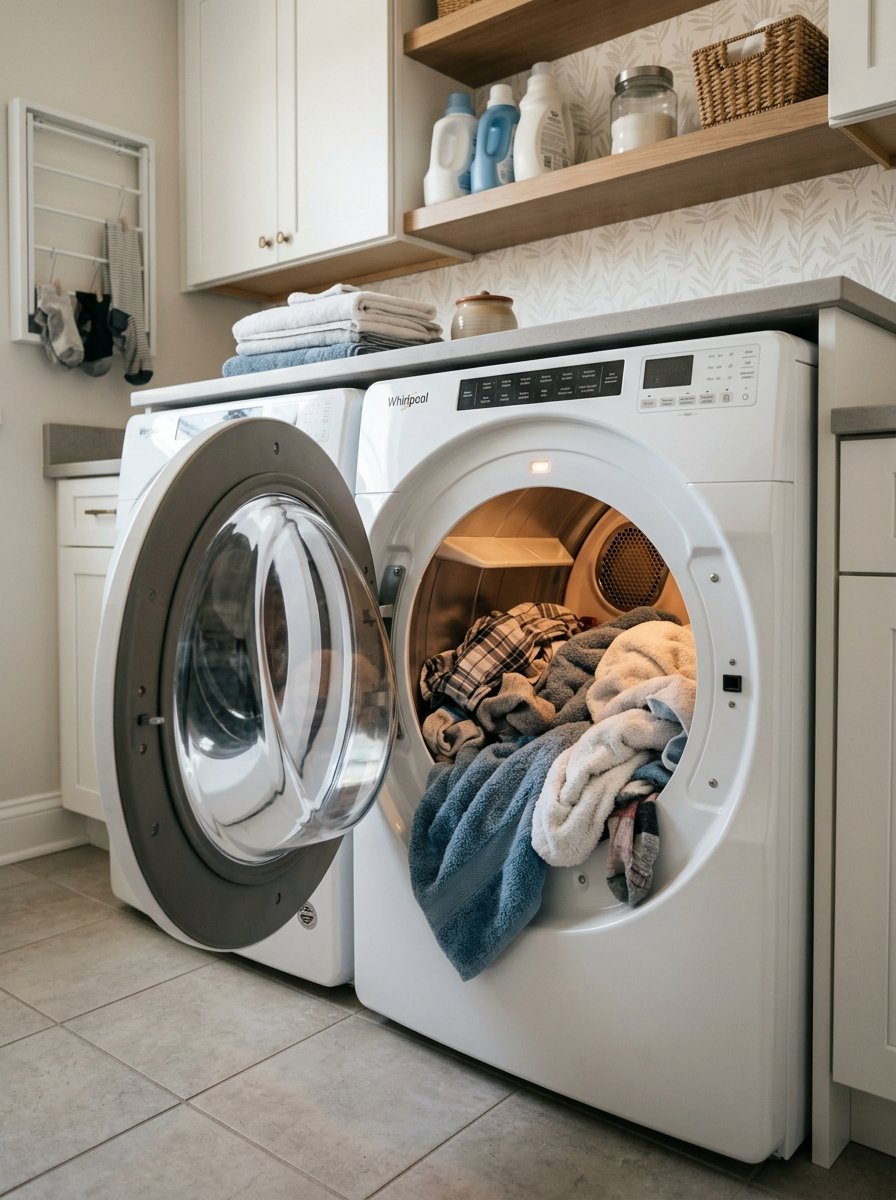
If you constantly have to restart your dryer for a second or third 60-minute cycle just to dry normal household laundry, your dryer's heating system is almost certainly fine—the machine is simply suffocating from an exhaust blockage.
The physics of extended drying times work as follows:
Efficiency Fact: Having your dryer vent professionally cleared typically cuts drying times back to 35–45 minutes, saving $25–$40 per month on residential utility bills.
Clothes taking forever to dry? Call (708) 221-8165 to restore fast, efficient drying cycles.
Clothes dryer lint is extremely fine, dry, and highly combustible—it is essentially pure tinder. When exhaust backpressure traps heat inside the dryer cabinet, lint that has gathered around the heating coils or gas burner can ignite in seconds.
Crucial fire hazard warning signs that require immediate action include:
Call (708) 221-8165 About Dryer Fire Prevention and schedule an inspection today.
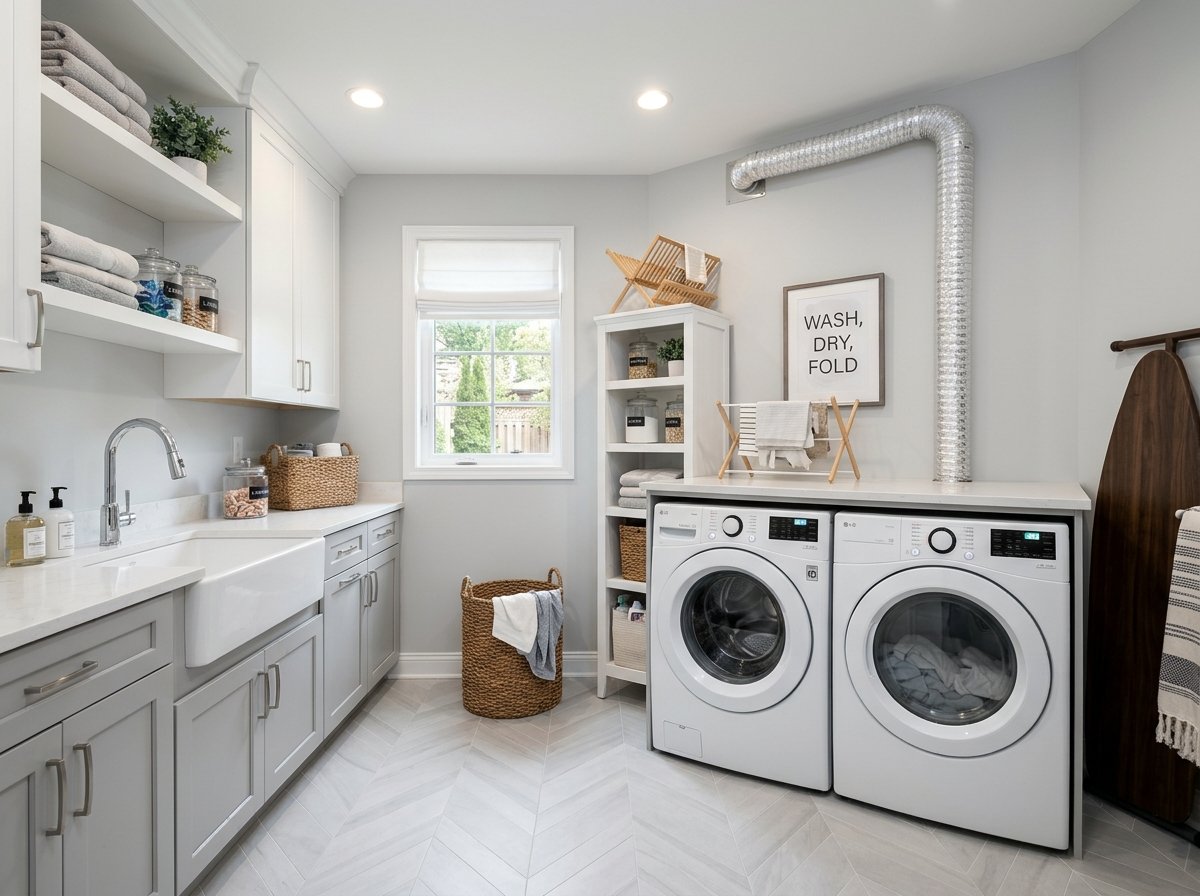
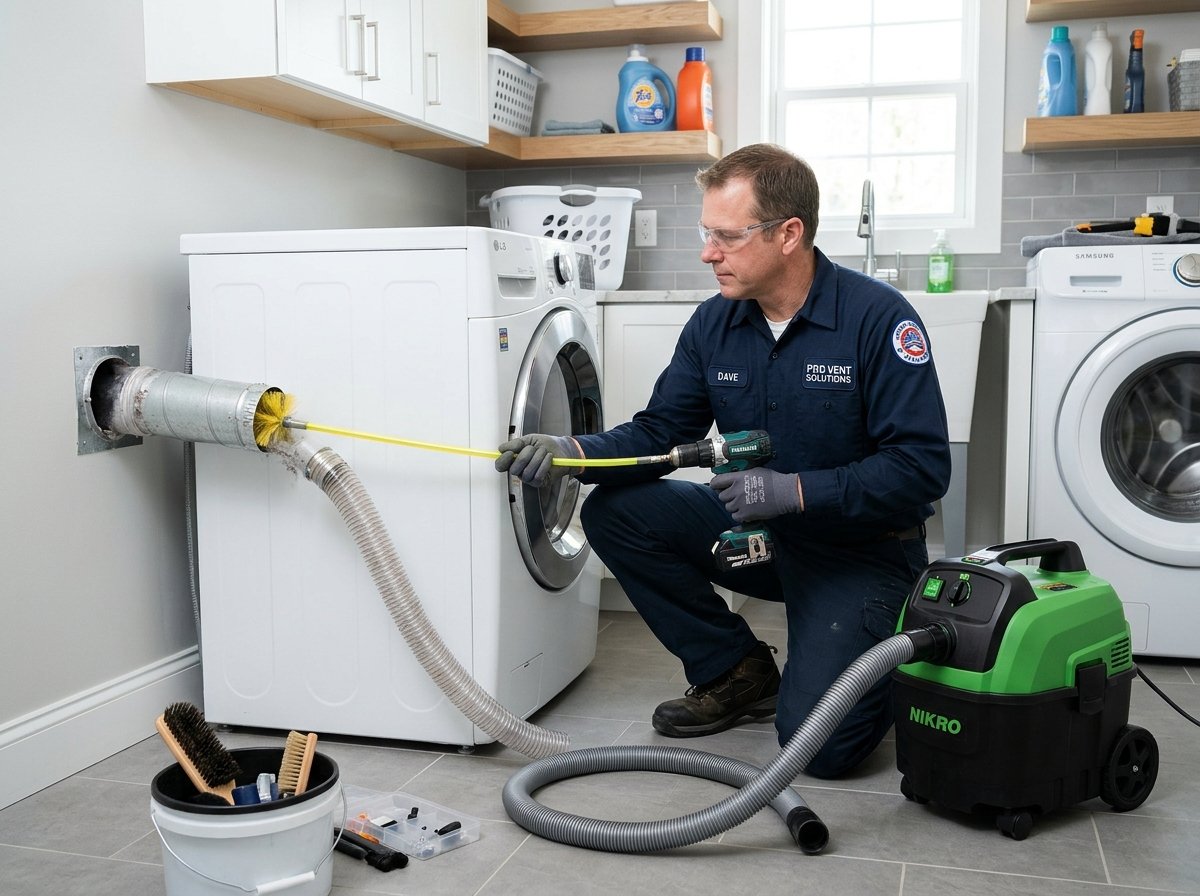
Many homes in Orland Park still have thin white vinyl spiral hoses or accordion-style silver mylar foil connecting their dryer to the wall. While cheap and easy to bend, these materials present severe structural fire hazards.
Why building codes prohibit flexible vinyl and plastic transition ducts:
Code Compliance: If your laundry room currently uses white plastic or flimsy foil transition ducting, our Orland Park technicians will safely replace it with code-compliant rigid aluminum conduit.
Our dryer vent cleaning process is thorough, clean, and certified with digital airflow CFM testing before and after service.
We measure exhaust velocity at the outdoor termination hood using a digital anemometer to establish baseline blockage.
We hook up our high-volume HEPA extractor to maintain strong negative pressure so zero lint enters your home.
Flexible rotary brush whips are fed the entire duct length, scouring hardened lint cakes off every elbow and joint.
We clean the exterior flapper, re-test exhaust CFM, and inspect the transition connection behind the dryer.
You don't need to climb on the roof or inspect the duct yourself. A few basic details help our dispatch team:
Not sure about your exact appliance specifications? That's okay—our friendly team will guide you when you call.
Ready to Talk? Call (708) 221-8165Call and speak directly with our Orland Park dryer vent specialists for fast, friendly scheduling.
In busy Orland Park households with active families, laundry dryers run continuously throughout the week. Whether you reside in a single-family home near Centennial Park, a townhome subdivision along the 143rd Street corridor, or a luxury property near 159th Street and La Grange Road, keeping your dryer exhaust duct clean is essential for household fire safety and energy efficiency.
Many Orland Park homes feature modern second-floor laundry rooms or finished basements that require extended duct runs with multiple 90-degree elbows. These complex configurations accumulate lint significantly faster than short through-the-wall vents, creating hidden moisture pockets and thermal bottlenecks.
Our certified technicians carry specialized high-reach rotary rods, ladder access gear for exterior roof terminations, digital anemometers, and industrial HEPA vacuums. We ensure the entire duct run is completely scrubbed clean from the back of the dryer all the way to outdoor air.
Service is available to homeowners across Orland Park (60462, 60467) and nearby communities including Tinley Park, Homer Glen, Oak Forest, and Palos Park.
Our vent cleaning and airflow restoration services support all residential clothes dryer manufacturers.
Brand names and logos are used strictly to identify appliances we are equipped to service. We are an independent repair service and are not implying official manufacturer authorization or warranty affiliation unless explicitly stated.
In most situations, professional rotary brush cleaning restores 100% airflow. However, certain duct materials or damaged installations require replacement:
Our technician performs a visual inspection and airflow velocity test to give you honest, safety-first recommendations.
Homeowners can significantly reduce lint buildup by following a few simple preventative habits:
Remove accumulated lint from the mesh screen after every single laundry cycle to maximize airflow through the drum.
Fabric softener sheets leave an invisible waxy residue that coats mesh pores. Scrub the screen every 6 months with soap and water.
Periodically check your exterior exhaust hood while the dryer runs to confirm the flapper blows open freely and isn't blocked.
Look behind the appliance to ensure the transition hose hasn't been crushed against the wall when pushing laundry baskets.
Only operate your clothes dryer when someone is home and awake so any unexpected thermal issues can be addressed immediately.
Have your entire duct run inspected and cleaned every 12 months according to National Fire Protection Association guidelines.
Never attempt to clean long duct runs with leaf blowers or high-pressure water, as compressed air can blow pipe joints apart inside hidden wall cavities.
If your duct has full airflow but the dryer drum remains completely cold, the heating element, gas igniter, or thermal fuse has failed.
In addition to dryer vent cleaning, we service other major household appliances throughout the community.
Frequently asked questions from Orland Park homeowners regarding dryer vent fire safety, airflow testing, and scheduling.
Call to schedule certified dryer vent cleaning in Orland Park or speak directly with our local team for fast, dependable service.